
Former managing director of Maruti Suzuki India, Jagdish Khattar, passed away on Monday morning following a cardiac arrest, according to people close to him. Khattar (79), a former bureaucrat, was considered as one of the most high profile leaders of the Indian automotive industry, laying the foundation for Maruti's future growth after the government began its disinvestment in 2002 and gradually exited from its joint venture with Suzuki Motor Corporation (SMC). He had joined the then Maruti Udyog Ltd in July 1993 as director (marketing) and went on to become executive director (marketing) in the next six years.

The country's largest carmaker Maruti Suzuki India (MSI) on Wednesday reported a consolidated net profit of Rs 475 crore for the first quarter ended June 30. The auto major had posted a consolidated net loss of Rs 268 crore in the April-June quarter of 2020-21. It noted that during the first quarter its sales and production were adversely impacted due to the second wave of the COVID-19 pandemic.

Maruti is in the final stages of talks with the state government to set up a manufacturing plant in Gujarat, similar to those in Gurgaon and Manesar.
Maruti Suzuki India (MSI) on Thursday said its new manufacturing facility in Haryana, the company's third in the state, would reach peak production capacity of 10 lakh units per annum in the next eight years entailing a total investment of Rs 18,000 crore. The new facility, which would come at a 800-acre site at IMT Kharkhoda in Sonipat district, will entail total investment of Rs 11,000 crore in the first phase with a production capacity of 2.5 lakh units per annum. The first set of vehicles are expected to roll out from the facility in 2025.
From the Sensex pack, Tata Motors, NTPC, Bajaj Finserv, Power Grid Corp, Titan, Asian Paints, IndusInd Bank, Maruti Suzuki India and Tata Steel were among the biggest gainers. Sun Pharmaceuticals, ITC, Hindustan Unilever, Bharti Airtel, UltraTech Cement and Reliance Industries were among the laggards.

Suzuki Motor Corporation (SMC) on Friday said it has terminated the partnership pact with Volkswagen AG (VW) after two years of unsuccessful attempts to gain access to technology from the German firm.

Luxury carmakers are shifting into high gear with a mix of product launches, personalised experiences and lifestyle-led engagement.

Hyundai Motor India (HMIL) raised Rs 8,315 crore from anchor investors on Monday, setting the stage for the country's biggest-ever maiden share sale. The Indian arm of the South Korean carmaker Hyundai Motor Company (HMC) allotted 42.4 million shares to 225 funds at Rs 1,960 apiece, the higher end of its price band. Among the investors receiving allotments were the Singapore government's sovereign wealth fund (GIC), New World Fund, and Fidelity.
The move offers flexibility in compliance but also places penalties squarely on the designated manager of such a pool.
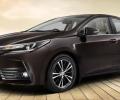
Toyota's India unit will also source two cars manufactured by Maruti Suzuki, the Baleno and Brezza, including their hybrid variants, and in return Toyota will offer its Corolla sedan to Maruti.

Maruti Suzuki India and Hyundai reported single-digit sales growth in July with the sports utility segment continuing to drive overall demand in the market. Mahindra & Mahindra witnessed a 29 per cent increase in passenger vehicle dispatches while Tata Motors saw a marginal increase in the wholesales last month. Maruti Suzuki on Tuesday said its total domestic passenger vehicle sales stood at 152,126 units last month as compared to 142,850 units in the year-ago month, a growth of 6 per cent.
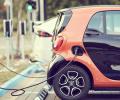
Despite the benefits of hybrid technology, a lack of government backing and few launches have kept the segment from gaining ground.
The new version has LED daytime running lights and silver detailing to the lower front bumper.
"My understanding is that the rules are weighted in favour of big cars, even though smaller cars emit fewer emissions per passenger, use less material, and consume less fuel," Bhargava said in an interview with Business Standard.
MSIL, which currently has a subscription service that allows customers to lease its petrol-run and strong hybrid vehicles on a flexible, long-term basis without ownership commitments, will introduce a leasing service as well.

Between January and August 2025, over 65,000 units of the Bolero were sold, making it the third-highest contributor to Mahindra's overall SUV sales. Bolero annually achieves sales of over 1 lakh units.
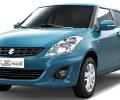
The long awaited product is likely to be launched early next year.

Maruti Suzuki and Hyundai Motor India on Monday reported a dip in passenger vehicle dispatches to dealers in the domestic market last month as the companies tried to adjust vehicle inventory amid slowing demand. Maruti Suzuki India said it "calibrated supplies" to the dealers, aligning with the industry's retail sales projections amid India-Pakistan conflict and a dip in sales of entry-level cars.
Maruti Suzuki India (MSIL) said on Thursday its operations are unaffected by the global rare earth magnet shortage, but added that the situation is "uncertain and evolving". The firm said it is exploring multiple solutions to maintain continuity in operations and will notify stakeholders in case of material impact.

For hatchbacks and sedans, offers range between Rs 40,000 and Rs 80,000 while SUVs and multi-purpose vehicles carry benefits exceeding Rs 1 lakh.
Suzuki Motor Corporation is believed to have promised to submit the business plan for joint venture Maruti Udyog by the month-end to enable the government to proceed with its proposed public offer.
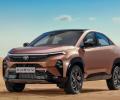
Tata Motors on Wednesday said it remains confident about the long-term prospects of the electric vehicle segment and termed the fall in sales numbers a "short-term" issue. In an interaction with PTI at the launch of the company's first mid-sized electric SUV, Curvv.ev, at a starting price of Rs 17.49 lakh (with 45 kWh battery) Shailesh Chandra, managing director of Tata Motors Passenger Vehicle and Tata Passenger Electric, said that the company is looking to achieve one-lakh electric vehicle sales this financial year. Curvv EV is the second car based on the advanced Pure EV architecture - acti.ev, which marks Tata Motors' entry into the highly competitive mid-size SUV segment and will be competing with the likes of MG ZS EV, Hyundai Creta and Maruti Suzuki Grand Vitara, among others.

With nearly 100 launches and unveils, the Bharat Mobility Global Expo 2025, held in Delhi from January 17 to 22, made one thing clear to automobile enthusiasts: Electric vehicles (EVs) are the way ahead for the Indian auto market for years to come.

Leading passenger vehicle maker Maruti Suzuki on Saturday reported marginal growth while Hyundai and Tata Motors posted a decline in their sales in February as a slowdown in the market continued with demand remaining muted. On the other hand, Mahindra & Mahindra and Toyota Kirloskar Motor posted double-digit growth riding on their SUV and MPV models.

Most of the engines used by Suzuki's two-wheelers in India are manufactured by Maruti at its Manesar plant.

The global recall of millions of vehicles has put the focus on quality.

Tata Motors surpassed Maruti Suzuki (India) (MSIL) to become the most-valuable automobile company, in terms of market capitalisation (mcap), after a gap of seven years. With this, the company's stock hit a new high on the BSE on Tuesday (January 30). The combined mcap of Tata Motors (Rs 285.51 crore) and Tata Motors DVR (Rs 29,119 crore) stood at Rs 3.146 trillion.

While Toyota will acquire 4.94 per cent shares of Suzuki, worth $ 908 million, the latter will make a $ 454-million investment in the biggest automaker of Japan. Premium products from the Maruti stable such as the Baleno, Ciaz and Vitara Brezza will be sold under the Toyota brand with small changes.
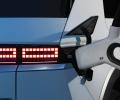
India may see its busiest EV festive season in 2025 with SUVs, luxury cars and scooters set to launch, but rare-earth supply bottlenecks risk delaying rollouts.
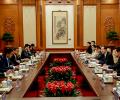
'We remain in touch with the Chinese side, in Beijing as well as in Delhi, to bring predictability in the supply chain.'
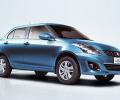
According to information available on the company's website, Swift, which was launched as a world strategic model in 2004, reached cumulative worldwide sales of four million units in August 2014 -- nine years and nine months since the start of sales in 2004.

Almost all of these companies either unveiled their new electric vehicle or alternative energy-powered models.

'Some buyers get carried away by festival offers and purchase higher variants or larger vehicles than they truly need, which impacts running cost and long-term affordability.'

India's biggest car maker Maruti Suzuki said on Tuesday that its vehicle production in September will tumble by 60 per cent due to chip shortage. The company, which had earlier cut down production at its Gujarat plant, said the chip shortage will hit production in Gurugram and Manesar plants, effectively forcing the automaker to cut production by 60 per cent. Owing to a supply constraint of electronic components due to semiconductor shortage, the company is expecting an adverse impact on vehicle production in September in both Haryana and its contract manufacturing company, Suzuki Motor Gujarat Pvt Ltd. (SMG) in Gujarat.

Global energy giant Shell has acquired Mumbai-based Raj Petro Specialities to deepen its foothold in the world's third biggest lubricants market in the world, a top company official said. Shell, which has already invested over $5 billion in India across the energy value chain -- from LNG import terminals and fuel stations to renewable energy and technology centres -- has acquired 100 per cent equity interest in Raj Petro Specialities Pvt Ltd from Germany's Brenntag Group.
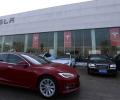
Tesla needs to either sell the same models with reduced features to lower the cost for Indian market, or incur losses.

Suzuki patriarch steps down from CEO post as mileage test storm grows.

Hyundai Motor India and Honda Cars India on Wednesday joined the list of automakers planning to hike prices of vehicles from April, second time this year, to partially offset the impact of rising input costs and higher operational expenses. In a statement Hyundai Motor India Ltd (HMIL) said it will hike prices of its vehicles by up to 3 per cent effective in April 2025.
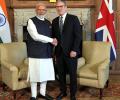
For UK automakers, market access to India will be limited by quantity caps and phased tariff cuts, especially on petrol, diesel and electric vehicles.

Tata Elxsi (TelX) reported a weak Q3FY25, with a sharp deceleration in the transportation vertical. However, recent deals in the Asia-Pacific (APAC), higher mix of original equipment makers (OEMs) and partnership with Qualcomm will improve growth. FY25 is the third successive financial year of revenue growth deceleration and second successive financial year of profit deceleration.
